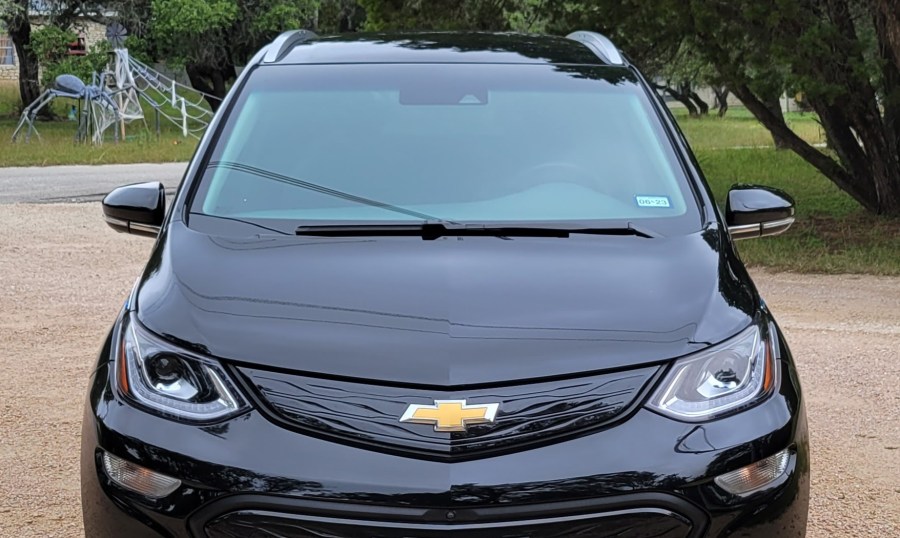
Eventually I got around to trying the Bolt, which, despite my baseless prejudice toward Chevrolet, already seemed very compelling. It’s true that compared to all of the new EVs, and even some of it’s older peers like the Niro and Kona, its charging speed of 50kW was unimpressive. And it was a miss that the 2022 refresh (which had just come out when I started looking) did not improve on that at all. However, the range was good enough for my use case that I didn’t plan on fast charging it often, and the fact that it was a bit outdated meant there was enough inventory on dealer lots to get some big discounts. This was also around the time when the Bolt became disqualified under the old EV tax credit scheme and Chevy took $7,500 off the price.
Unfortunately, Chevrolet proved my prejudice right by consistently being the worst dealerships to work with. It took me a couple of tries to even get a test drive. No salespeople seemed very familiar with the vehicle, which shouldn’t be too surprising in Texas where I’m sure the majority of their sales come from trucks, but it was a stark difference from VW where they had clearly received training on the new ID.4 and were much more excited to sell it. However, I like to do my own research anyway, so it wasn’t a big obstacle to overcome.
While probably not its biggest selling point, I liked the way the Bolt drove. It felt pretty planted, despite its narrow wheels, it handled well, and it felt as zippy as its competition with much less wheel spin than the Niro. However, I think what really won me over about the Bolt was all of the bells and whistles for the price. It had dropped in price enough that I was able to consider the top, “Premier” trim, which included a ton of upgrades. I’ll detail those more when I talk about living with the car.
So I liked the car after seeing it in person and test driving it. Now it became a game of finding the best deal, which was not very straightforward. Many dealers had 2021 models, but some still had 2020s, with each dealer offering a slightly different price based on how long they’d had it, whether or not it was a demo vehicle, etc. This made it difficult to negotiate between dealerships because their stock usually wasn’t similar enough to price match. Some dealers had also started to get 2022 models, which had a lower sticker price and slightly different trim structure. I wasn’t really considering these because the older models were generally being sold for less, but their presence further complicated the shopping experience. Then there were deals offered by GM, which were at least consistent between dealers, but not month to month.
Despite there being plenty of stock that had obviously been sitting on dealer lots for a year or more, it happened more than once that one sold out from under me as I was closing in on a deal. I’ll spare the rest of the details, but after a couple of months I finally committed to a black, 2020 Bolt EV Premier at Northside Chevrolet in San Antonio.
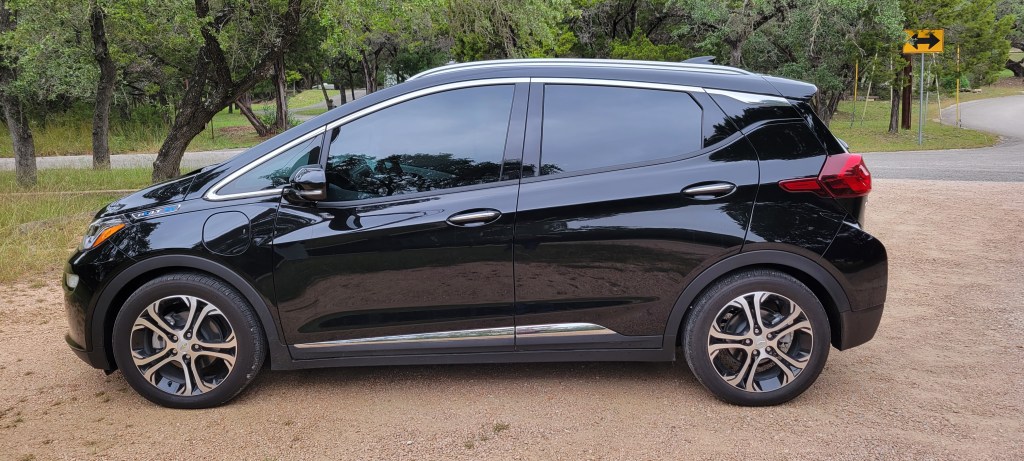
I left a pretty thorough review of my experience at Northside on Google, so I won’t rehash that here, but suffice it to say that I experienced a lot of the same frustrations I had at the other Chevrolet dealerships and left with a bit of a bad taste in my mouth. This is important because it colored a lot of my experience with the Bolt. Part of that was due to this being my first time purchasing a car at a dealership, but as I learned just a few weeks later when buying a Subaru at Austin Subaru, there are much better dealership experiences out there.
 Miniwatt Auto