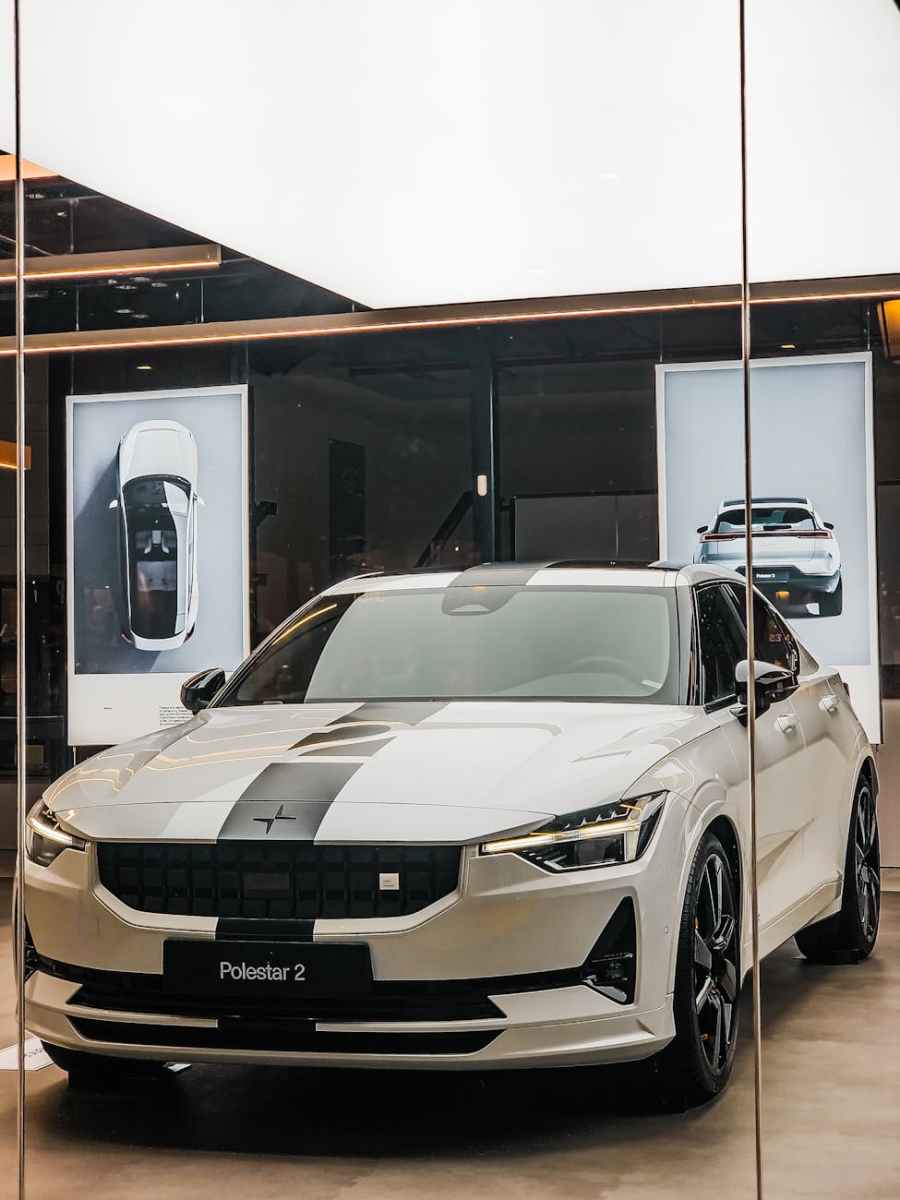
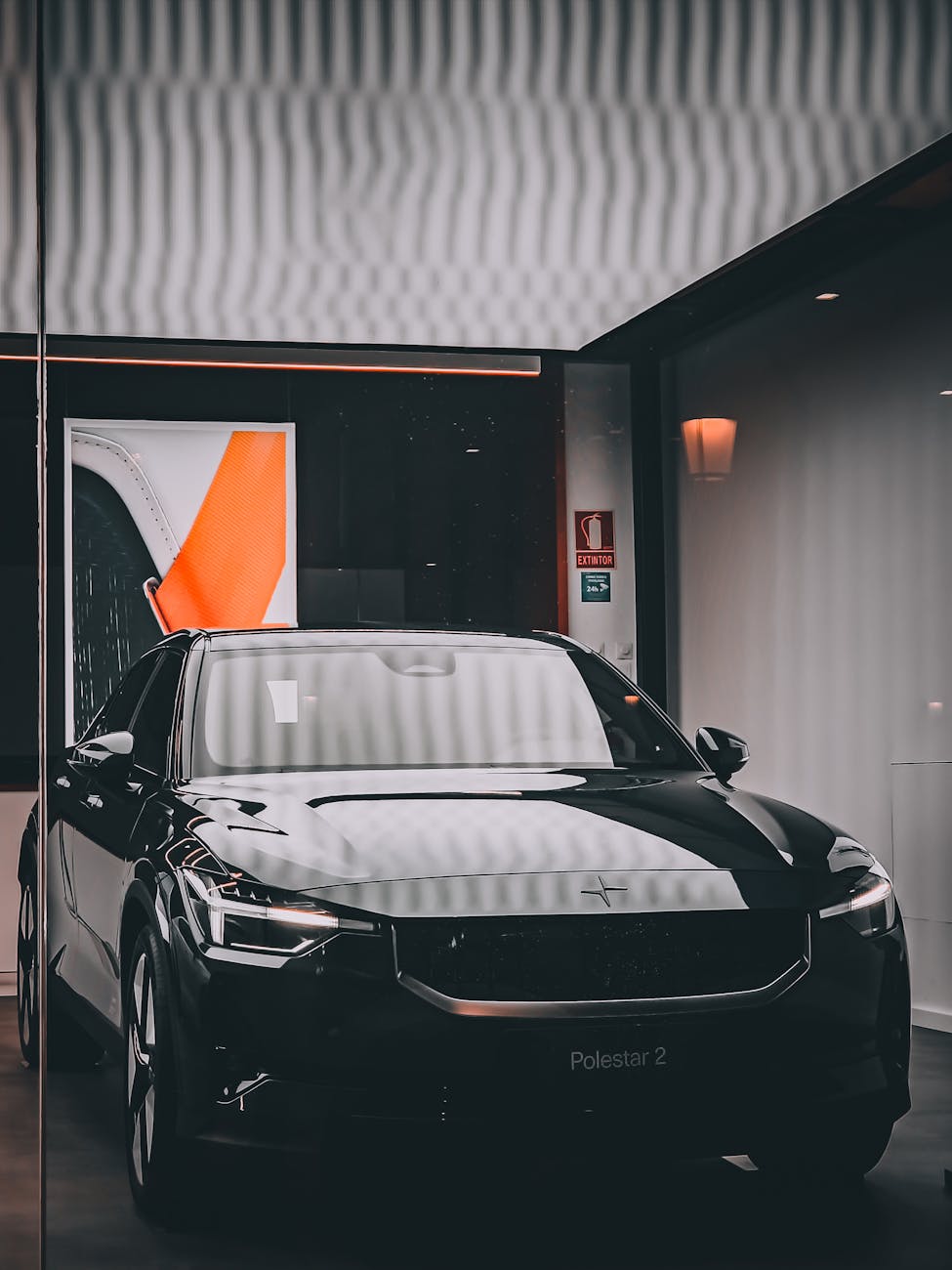
I’m not exactly sure how it happened. I think my desperation and the lack of affordable options had me pushing my budget up and up until one day I found myself on the brink of getting a Polestar 2. I’m glad I didn’t. I loved the car, but it would have been a financial stretch that I would have regretted.
I think what got me in the door was the idea that I could swap my Outback for it, then get a cheaper second car to break even. Financially I don’t think it was a crazy idea: the market was still so wild that I probably could have gotten what I paid for the Outback. But the Polestar really wasn’t a good replacement for the Outback. Despite the marketing, it is not an SUV; neither in shape nor size. It was shockingly small in person; more comparable to a current Civic hatchback than anything else. But honestly, all reason went out the door as soon as I drove it. None of the other cars I had tested remotely prepared me for how it felt. Such instant acceleration and absolute poise when thrown into a corner. I actually brought a friend with me on the second test drive to get a second opinion and he was as blown away as I was.
That basically sold me right there, but the car had some other good things going for it. The integrated Android Automotive and center tablet felt very responsive and intuitive. Overall the UX felt simple, but complete; a very holistic experience. As someone who uses Google Maps for directions already, using it for route planning in the car seemed ideal. I also loved the map view in the instrument cluster, allowing you to see full navigation, without having to look down and away to the center console. I also loved that it was a lesser-known brand and had really cool but understated styling; no loud branding or cheap details. It felt like one of those, ‘if you know, you know’ cars. Finally, the dealer experience, though not fully direct, was much more transparent and hassle-free than a traditional dealership. This meant you could shop online and expect that price when you went to the dealer, and the sales people were not pushy. Plus, as a new brand with just one model, they were very knowledgeable.
There were some cons, aside from it being outside my budget. One was value: I don’t remember the exact price, but the base car was not ‘luxury’ expensive. In fact, I think with the tax credit it was around the average new car price. The problem was the strange spec choices they made. The base car was inexplicably FWD (this has since been changed to RWD) and significantly slower than the dual motor. More importantly, the base car was lacking things like adaptive cruise control and heated seats that are standard on cars $10k less. I dislike the typical trim tiers that make you pay for a bunch of extras you don’t want just to get one feature you do. Polestar’s approach of creating thematic packages seemed better on its face (if driver assistance features were more important to you than interior comfort, for example, all of that was lumped together), but in practice it still split up options I wanted across two expensive upgrades. I knew I wanted the dual motor, so there’s another couple thousand, then I was stuck deciding whether to give up adaptive cruise control or settle for cloth seats, or just add both packages to get everything I want, which would put me $10k over the base price. The other con is what I would describe generally as ‘packaging.’ The shape of the car, which is part of what made it look so good, encroached on some usable space, notably in the trunk where, sadly, my poodle could not really stand up. But even in the back seats my head scraped the roof and I’m only average height. Another symptom of this was visibility, which I would describe as “not great.” The sloping liftback resulted in a sliver of a rear window and the chunky pillars created some significant blind spots. Finally, the fact that it was on Volvo’s CMA platform, which was designed for PHEVs and ICE cars as well, meant it didn’t make the most of the space afforded an EV. This was most noticeable in the front seats, with a really high center console that made you feel you were in a cockpit and didn’t really offer storage for anything but small items.
Part of the other reason I convinced myself I could get the Polestar was the possibility of leasing it. I had never leased a car before and didn’t fully understand the process. Frankly, I still don’t fully understand the process, but it seemed to address many of the challenges I was facing at that time: 1) that there were no affordable cars that met all my needs, 2) that EV technology was changing so fast that it seemed foolish to shell out a ton of money for the current ‘latest and greatest’, 3) that the tax credit was a valuable but confusing incentive, and 4) that the car market in general was in a state of scarce inventory and high prices. It is possible that a lease was the solution to these problems, but as I got closer and closer to signing a deal, I realized that I was in over my head and called it off. I’m just not prepared to sign a financial deal that I don’t fully understand. I did understand it enough, however, to realize that Polestar was not passing on the full tax credit to lessees, so be careful when signing a lease deal if you are counting on benefiting from the tax credit.
That was the end of the road for me and the Polestar 2. It would have been a very cool car to have, but I’m happy I gave it up, as it was not perfect enough to overextend myself for.
 Miniwatt Auto