
Pros
Driving
Get behind the wheel of the SE and even mundane trips can be fun. More than the zippiness, which I expected, I am impressed by how planted it feels. The low center of gravity, relatively long wheelbase, and well-tuned suspension make it feel really solid on the road. I actually got the opportunity to live with the gas version of the 2-door Cooper S for a bit while my car was serviced and the difference was noticeable. Without the mass of the battery in the floor that car felt unsettled over rough pavement and the ride felt less premium.
Acceleration is good but not overly-impressive, especially off the line. In the standard traction control setting, even in Sport mode, torque is so limited that a heavy foot will still not produce any wheel spin. Full power seems to kick in around 35-40 mph, so where you get the most fun acceleration-wise is stabbing the throttle for little passing moves while already cruising. More pull down low would be great, but is probably not possible with a front wheel drive setup, and I’m happy that I don’t have to worry about squealing tires just pulling out of the neighborhood. With traction control all the way off you do get enough extra power off the line to roast tires, if that’s your thing. Steering is quick and precise. Probably the biggest miss is the fact that the i3, where the SE’s power train comes from, is RWD but this is FWD. I understand that’s the Mini way, but I think this car would be so much more fun in RWD.
Build Quality
I have to give BMW/Mini props on the build quality of this car. I think Minis generally fall more in the ‘premium’ vehicle category, so this makes sense, but with the price of mine being more in the ‘economy’ range, I don’t think I could ask for a better built car. The doors are hefty and close solidly, rattles and squeaks are minimal, and the cabin is pretty quiet. I will note however that road noise increases noticeably without the rear seats up and the cargo cover and false floor installed.
If I were to separate it out I would probably rate the materials quality as “neutral” because the Signature trim has plenty of hard plastics and some of the touchpoints do feel cheap. But the fact that the seats are leatherette instead of cloth is enough for me to forgive the rest. Overall it just feels like a well built car and adds to the feeling of value I get from it.
Speakers
For just being the base sound system, I am really impressed with the audio in my SE. Volume is good, sound is crisp and clear, and the bass sounds amazing to me on most songs. It lacks some oomph down really low, but 90% of the time it sounds great; though I’m not the most discerning audiophile. Given the choice between my two cars, earbuds, and home Bluetooth speakers, the Mini is where I prefer to listen to music.
Regen Braking
As quickly as I fell in love with regen braking I became picky about it, and I am mostly impressed by the Mini’s. The modulation is superb: response is smooth and consistent with no jerkiness or unexpected feedback, even down to zero. It is pretty strong and will bring you down to a stop once you get the timing right. That being said I wouldn’t mind a stronger regen setting as you do have to plan ahead a bit to come to a full stop. My main gripe is that it will only hold you at a stop on level ground or facing slightly uphill; if you are facing down-slope at all you will roll. What’s especially annoying is that it feels like it brings you to a stop and then lets go a bit, so I think they could have fixed this. It’s not the end of the world but it keeps it from being one-pedal driving in all situations.
My only other complaint is that the low regen setting (which I appreciate that it has) isn’t as low as I’d like. I feel that if you are only going to have 2 settings, they should be full one-pedal driving and off. It is low enough that non-EV drivers will find it comfortable, but I like to burn the rust off the rotors after a rain and even in the low setting I have to basically do an emergency stop to be sure I’m engaging the actual brakes.
Headlights
The Mini may just have the best headlights of any car I’ve experienced, which is especially impressive considering how low to the ground it is. Both low and high beams are bright and crisp and give excellent visibility. The low beams are good enough that I will forego the high beams on 35-45mph roads because the low beams give enough light without blinding me from the reflection off the street signs. But the high beams throw a lot higher and farther, making a big difference when needed at higher speeds. It also has cornering lights that activate at low speeds.
App
I’m pretty impressed with how much you can do/see from the companion app. It of course has the basics – mileage, lock, unlock, precondition – but it goes further and actually displays the status: whether it is currently locked or unlocked, and even whether the windows are closed, which has saved me having to get out of bed on a rainy night to check. If a window or door is open it will display an alert in the app to get your attention.
Charging settings are especially robust; surprising, given how limited they are in the car and the fact that this is not a dedicated EV platform or app . You can see state of charge, whether its charging or when it will start, how long until full. You can alter your charging and preconditioning plan. It shows really detailed charge history statistics with all kinds of breakdowns and even charging costs. The map is much easier to use than the in-car one and even does rudimentary route-planning. You can also send a destination to the car, which I use a lot because it’s so much easier to search in the app.


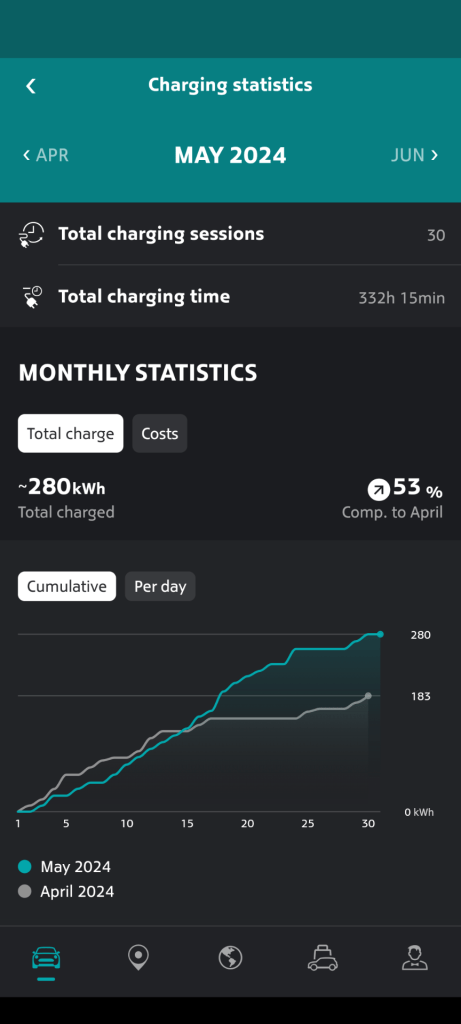
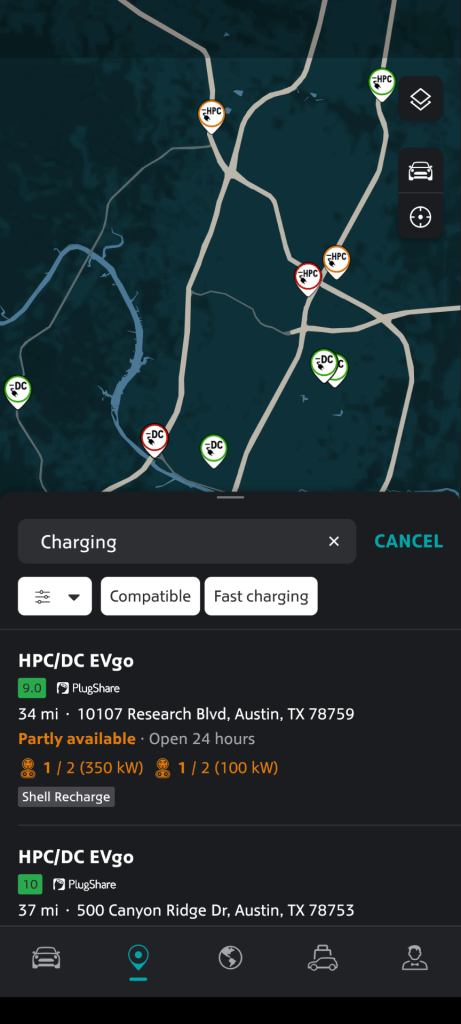
I use the app often and it enhances the ownership experience a lot more than I expected. The only thing that remains to be seen is how long I retain access for because this kind of connectivity is not usually a lifetime thing.
Cockpit
Instrument Cluster
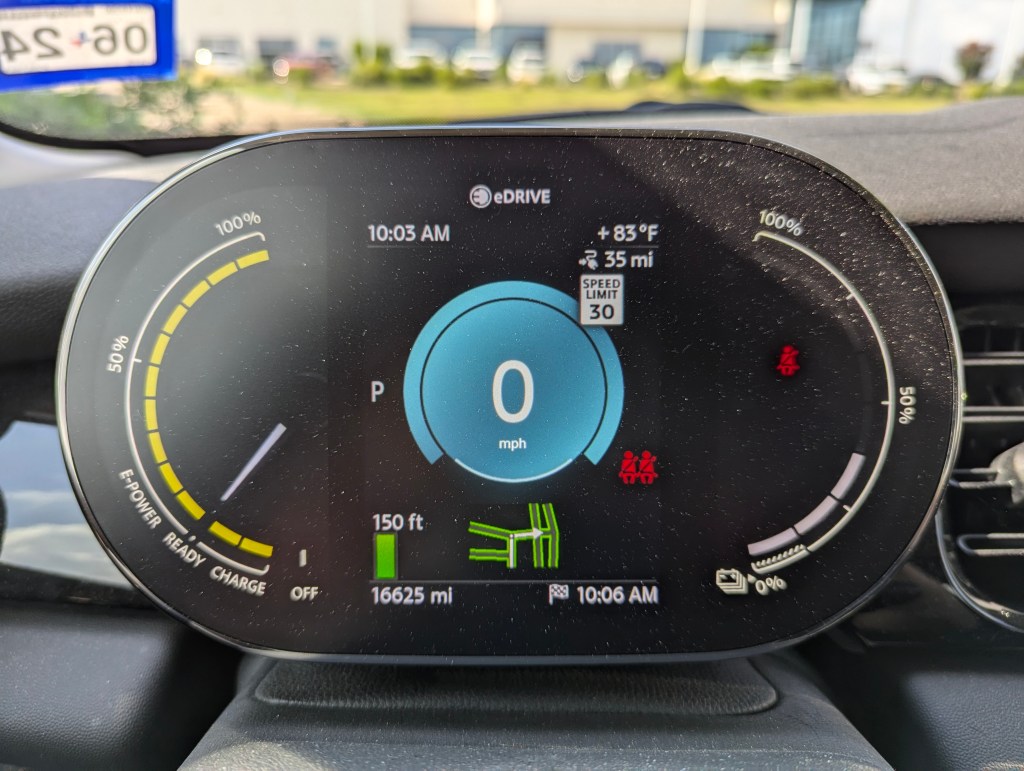
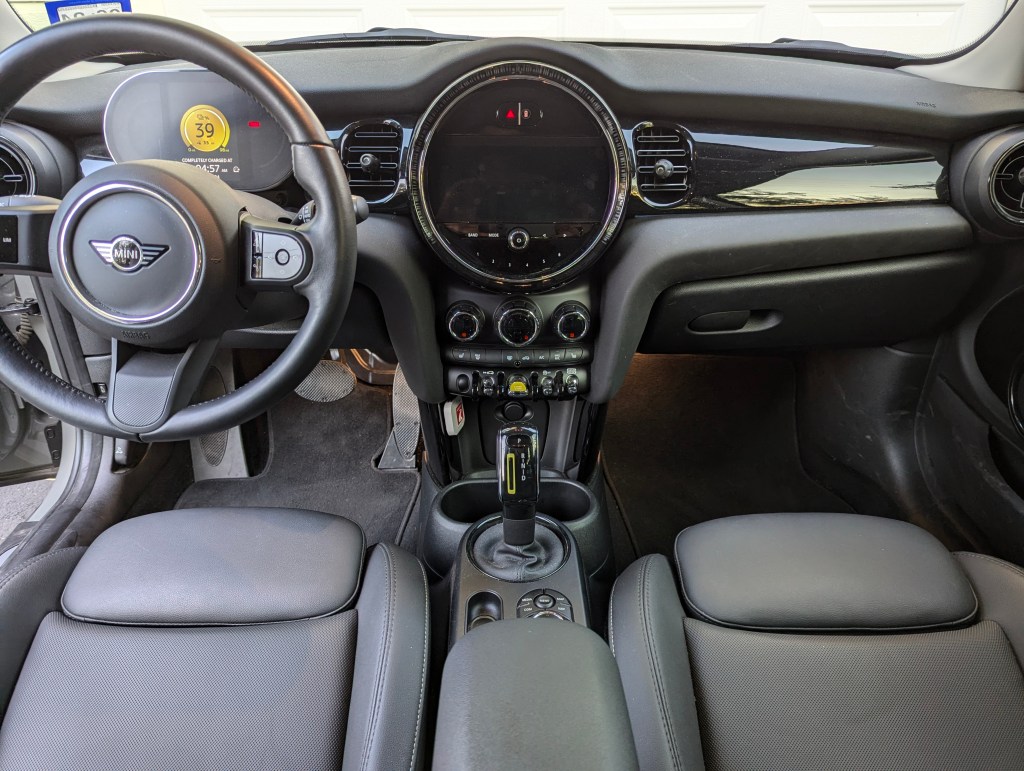
I quite like the instrument cluster; although the information displayed is pretty basic and since they use the same semi-analogue cluster from the gas car it’s not really tailored to an EV. On the left, the tachometer has been repurposed to show how much power you are using or putting back into the battery, but it doesn’t actually give you any numbers. The gas gauge on the right shows your battery charge, but for some reason it’s broken up into 8 segments, so it shows your SOC to the nearest 12 1/2 percent. Not very intuitive. Fortunately there is a separate percentage display. The rest of it you can see for yourself; I’ll just note that the current speed limit is displayed using a combination of GPS and the camera, which I love, but it gets tricked by school zones, construction zones, etc. so it’s not 100% reliable. Lastly, when using the native navigation it will display your next turn within the instrument cluster, which is a nice touch.
Steering Wheel
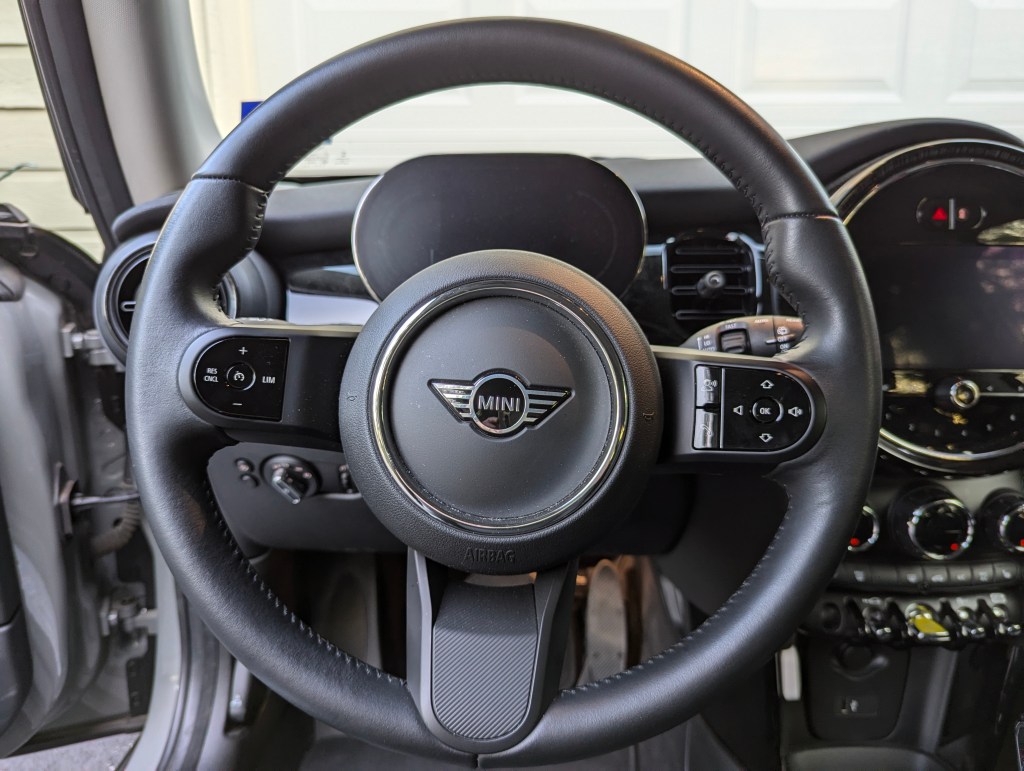
I learned from driving a 2024 Mini that their steering wheels have gotten worse, but even mine is almost too thick for my taste, especially the sport grips. I find that my hands get a little tired on long trips. Aside from that the wheel is good: the leather is nice and smooth and it’s got good steering feel. I’m not a huge fan of the steering wheel buttons: they are shiny black plastic and feel a bit cheap. They’re also not as useful as they should be. For example, you have to push the seek button twice to skip a track, the button to toggle through the display information is on the end of the stalk instead of the wheel and I always confuse it with the auto high beam button, and there is no steering wheel button to view in-dash warnings; once the text pops up and disappears you have to go into the infotainment system to see what the warning is for.
Shifter
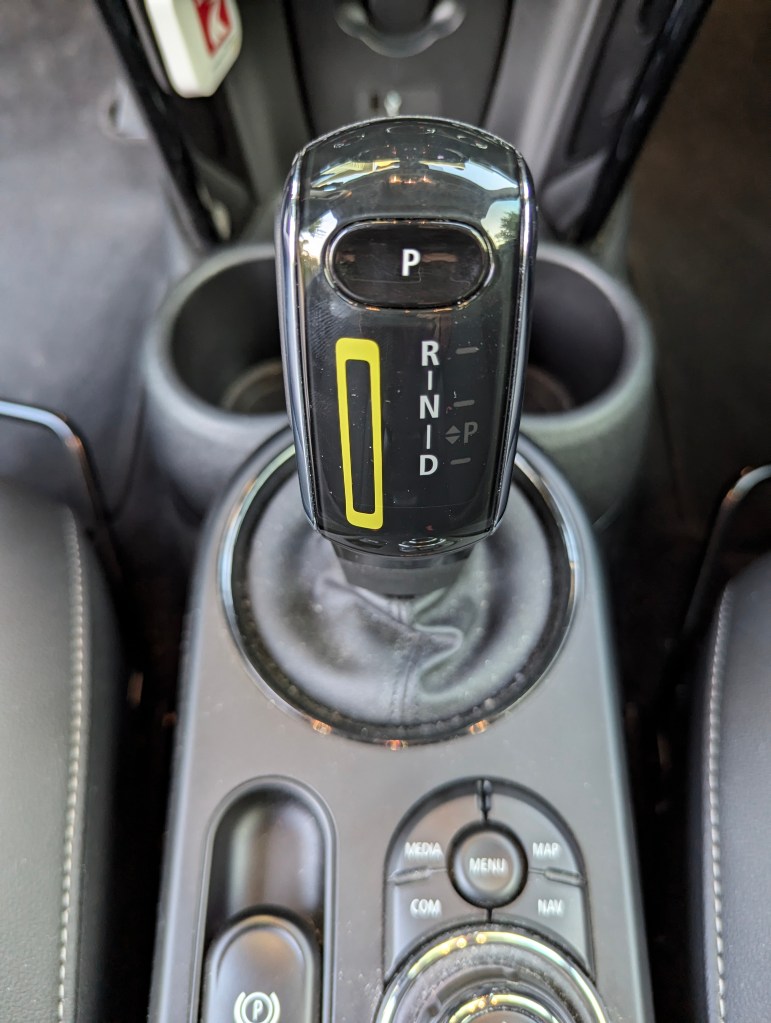
The shifter is nothing special, but at least it doesn’t have a weird shift pattern like my Bolt did. It takes up a lot of unnecessary space though. It’s clearly the same shifter from the gas car, which would have a manual mode, but the SE only offers Park, Reverse, Neutral, and Drive. It would be nice if they came up with a lower profile gear selector and used that valuable real estate for storage.
Seats
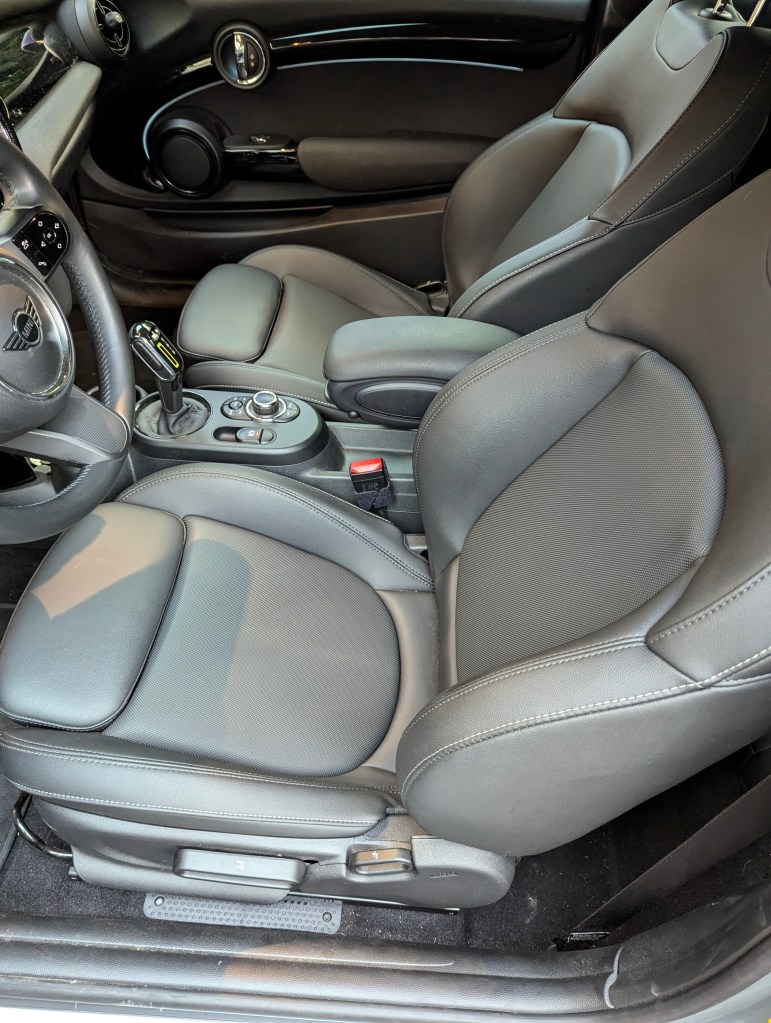
I like the front seats, but I could see them not being for everyone. They have noticeable bolsters which might be uncomfortable for a wider person, but I fit well in them. Although I don’t do many trips over 1 hour, I feel the seats would be more comfortable to me on a long trip than my Subaru’s. They have extendable thigh supports, which is a neat idea, but not something I need it turns out. They are fully manual, which is ok by me and my only complaint is that the bar you pull to slide fore and aft feels flimsy and you have to pull it just right.
Buttons/Controls
Again we have an unnecessary Start/Stop button. At least it’s a cool toggle in the Mini, but it’s even less useful than the Bolt’s, which allowed you to keep the car on. The Mini will turn itself off every time you get out and you have to push the Start button again when you get it. This makes something like hopping out to get the mail really annoying. That being said, the fact that the rest of the controls are physical buttons is a plus. I have come to really like the Mini controller – a multipurpose knob that allows you to control the infotainment system from the center console. For small inputs I find it noticeably easier and safer to use than reaching for the touchscreen, especially the hotkeys surrounding it. Pretty much everything you need is at your fingertips.
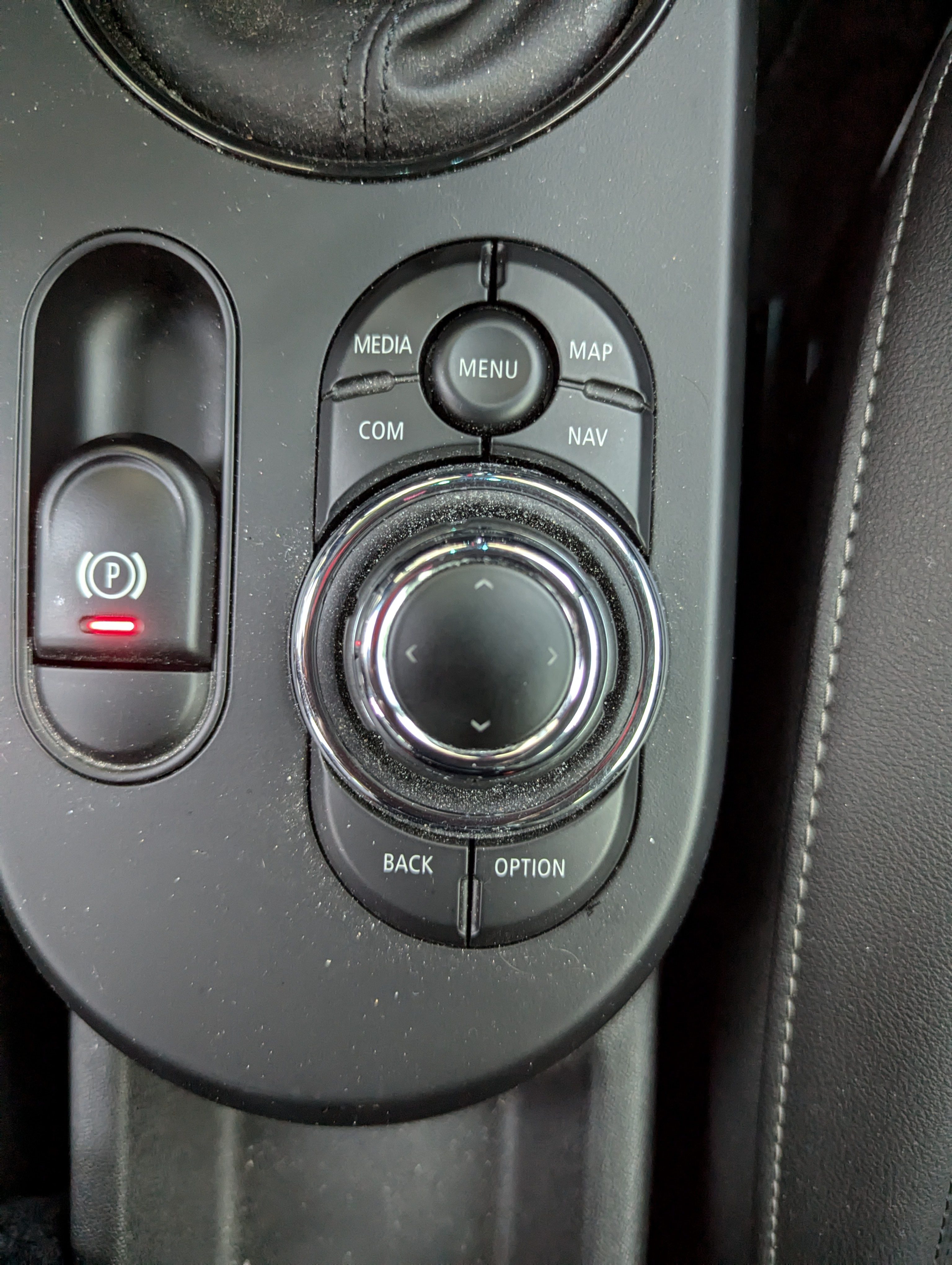
The Mini even has something I have wished for so much in modern cars – programmable buttons! The six radio station preset buttons can be linked to just about any function, so settings like tire pressure that are buried in sub-menus can be made easily available! You just have to remember which setting you mapped to which button, but they even thought of that: when you put your finger on a button it will preview what function it’s set to.
Signature Trim
I am really happy with the Signature trim. It seemed like maybe Signature Plus was the most popular trim but I do not feel like I am missing out on the sunroof, mixed cloth-leather seats, and whatever else you got for a few thousand more. The Harmon Kardon sound system would have been nice but I am pretty happy with the base speakers. And the only upgrade I really wanted, Adaptive Cruise Control, was technically available on the Signature trim if it weren’t for the chip shortage. They did remove the custom mirror cap and roof color option on the Signature trim the year I ordered mine, which did make it seem like less of a value, but all in all I feel like I paid a good price without leaving any desirable options on the table.
Neutral
Utility
Relative to its size the SE has quite a lot of utility. I put it in the neutral category simply because it can’t be judged in a vacuum and its size and lack of doors impose a serious limit on its practicality. I am proud to say that I regularly bump up against that limit though. My 70lb dog gets schlepped all over the place in the back; we’ve loaded it down with chairs, yard games, and a cooler for picnic days; and I’ve had every seat filled on multiple occasions. For how fun it is to drive, it offers a lot more utility than something like a Miata or even a BRZ, Mustang, etc.
Passenger Seating and Storage
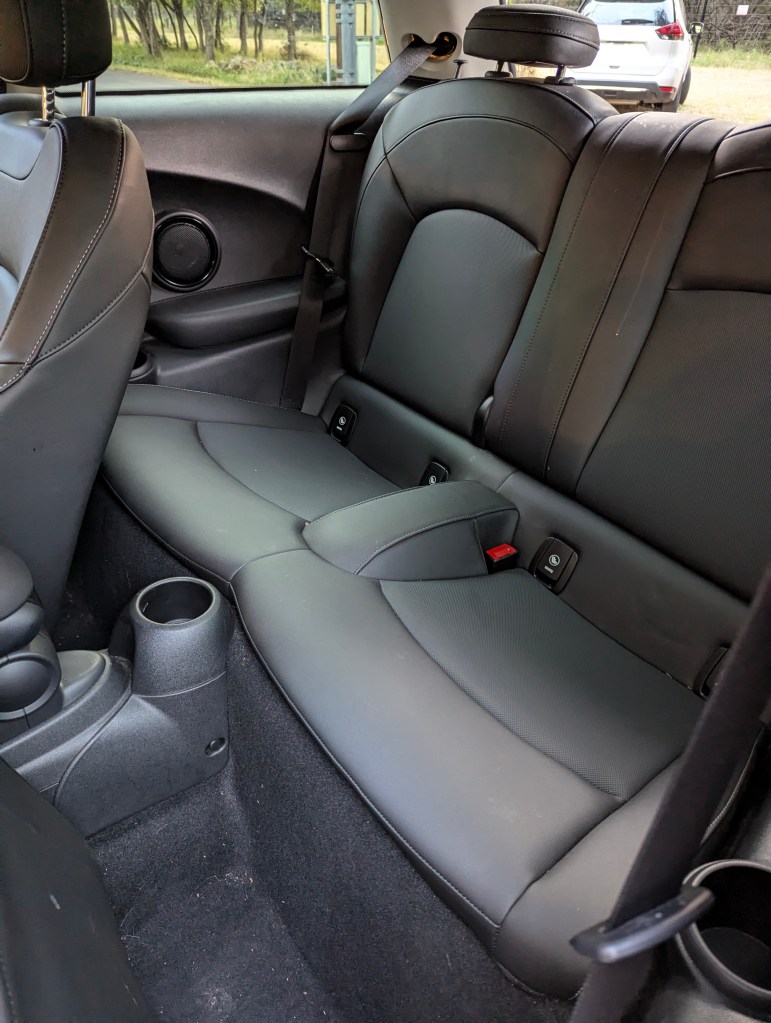
The front seats offer plenty of space for tall people, but there is a distinct lack of useful storage in the front. There are a few little spots, but I’m always throwing stuff in the passenger seat that won’t fit anywhere handy. There are a lot of cupholders though. There are just two seats in the rear. They are surprisingly comfortable…if you can fit. Leg room is in short supply and it’s hard to get in and out. I have a couple of friends that just won’t fit back there.
Cargo Space
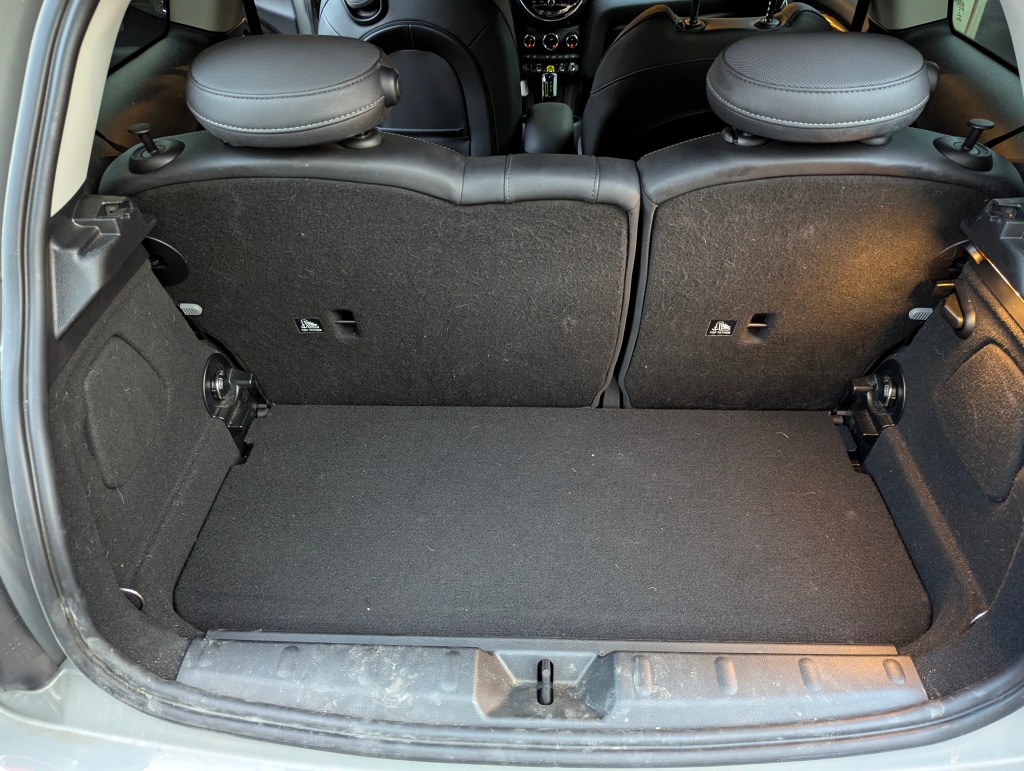
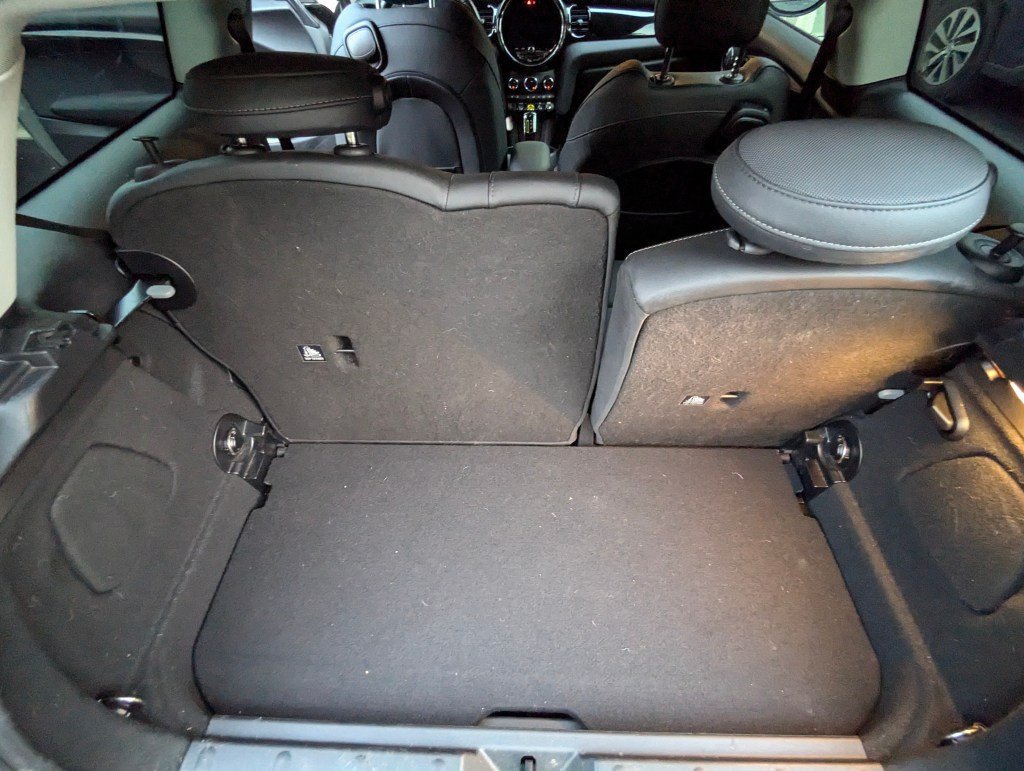
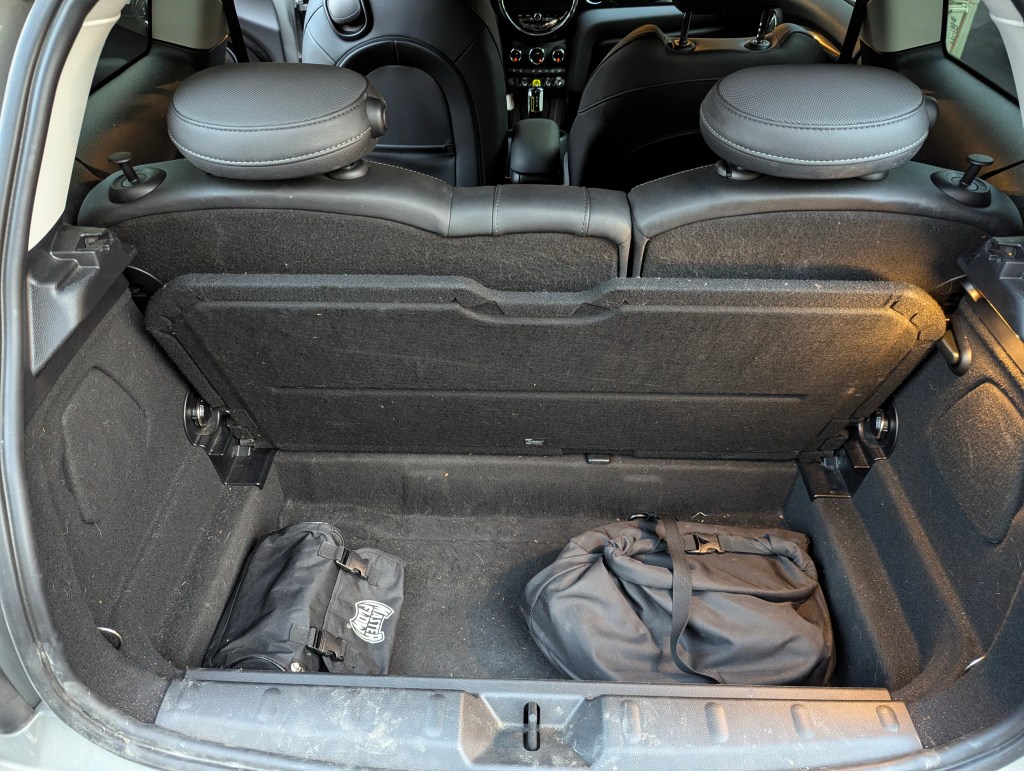
The rear storage is pretty modular, which adds to the utility. My favorite feature is the three-position rear seats, which in addition to the standard position and folded flat can be locked fully upright, which squares off the cargo area. It renders the rear seats too uncomfortable to sit in, but significantly improves the rear storage, allowing me to put my dog back there without folding down the rear seats. There is also a false floor insert that gives you a three-stage load floor in the back. The hinge and lock that holds it open is more sophisticated than the false-floor in my Bolt, but it doesn’t store anywhere convenient with the rear seats fully upright so it’s almost always in my garage. There is also a small amount of storage underneath the bottom floor. This is where the tire mobility kit is supposed to go, but I also keep a couple of bungees in there.
Frunk
It probably goes without saying but there is no front trunk. In such a small car even a small frunk just for the charge cord and mobility kit would be very welcome. The space under the hood looks pretty full but they probably could have freed up some space if they’d put more thought into packaging. But I’m not losing any sleep over it.
Driver Assistance
My SE has minimal driver assistance features, which is what lands it in the Neutral category, but I like the function of the ones it does have. Cruise Control works well and disengages smoothly (regen does not kick in immediately). The plus and minus buttons go in 1mph increments with a standard press, or 5mph if you press further. I like this idea, but the buttons feel a bit flimsy when pressed hard in quick succession. I still wish the chip shortage hadn’t prevented me from spec’ing adaptive cruise control. One nice bonus it does have is a speed limiter, which I have never used before. You set it to the maximum speed you want to go, then drive as normal, but it will cut power once you get above your set speed. It’s a nice in-between that allows you to look at the speedometer less without being disengaged from the driving experience.
Like all auto-high beams the SE’s are not perfect, but I do use them often and I like that they are activated with a button and not on by default, so it’s easy to use them manually if you prefer. The auto-wipers on the other hand work really well. I rarely have any complaints about their activation or speed and I really appreciate not having to constantly adjust the wiper speed.
I’m going to put the camera and proximity sensors in this category as well. The rear view camera is pretty crisp and offers a decent field of view, but even in such a small car I wish there was a 360 view. My SE has rear proximity sensors, which are nice but a bit redundant in my opinion with the camera. I would much rather have them up front.
Beyond those features, Mini is pretty hands-off, as a brand. They sell it as a “pure” driving experience, but I’m sure it’s a cost-cutting decision. It does not have automatic emergency braking, lane-keep assist, or any intervention functions. I highly doubt that the warnings it does have would save you if you were truly inattentive: the forward collision warning comes far too late to get your foot on the brake, even in the most sensitive setting, and the lane departure warning is a gentle rumble in the steering wheel that would not wake anyone up. However, they can be helpful reminders if you are only half paying attention, and you don’t have to deal with any phantom braking issues or fight the car for steering control around corners. I believe you can also turn all assistance features off.
Charging
For fast charging we have one pro and one con. The charge curve is quite impressive: it shoots up to max charge speed immediately and holds there until almost 80% when it slowly walks down. That’s as good as you could ask for as far as I’m aware. The problem is that max charge speed is 50kW. Sure that’s the same as the Bolt for a battery pack half the size, but it’s still not impressive. At about 30 minutes 10-80% it’s probably above average when it comes to charging session time, but that’s only going to get you 70 miles of real range. I don’t want to complain too much but can you imagine if it had 100kW and could get you 10-80 in 15 minutes?!? I don’t even know if that’s possible with such a small battery, but it would make a big difference.

Since I plug into a standard 120v outlet at home and rarely use Level 2 chargers I don’t pay too much attention to AC charge speeds, but I think they are fine given the size of the pack. The car offers three amperage settings on AC: “low,” “reduced,” and “maximum.” I don’t remember what the corresponding amperages are. With my old house I play it safe and charge on low if I can and reduced if I need to. Plugged into a 120v outlet I can recharge about 20-25% overnight, which is more than enough for my daily commute. A 240v outlet would obviously have no trouble charging from 0-100% overnight. My car came with two EVSEs: a fixed one for a 120v outlet and a nicer one with swappable plugs that came with NEMA 5-15 and NEMA 14-50 plugs, but BWM sells additional ones.
The car and app have several useful settings for tailoring your home charging experience, but there is one major omission: no max charge limit. I understand that it’s a small battery with pretty good top and bottom buffers, so Mini didn’t think owners would need/want to stop short of 100%. However, Mini’s own manual recommends only charging to 80% and I would absolutely use the charge limit setting if I had one, especially when going out of town. As it stands, you could buy a home charger that has that function or you can try to game the settings available to you to achieve a similar result, which is what I do. If I know the car will be sitting at home for several days I get the battery down pretty low, set the amperage to “low,” then set it to charge only an hour or two each day. But here’s one of the little annoyances: to use the “charge in time slot” setting you have to set a departure time (the Mini will then charge as needed to be full at that time, whether you want it to or not) and the furthest out you can set that is 1 week. This is way more trouble than most people would go through just for the chance to extend their battery life a bit, but I don’t see the harm in Mini providing all of the options.
Infotainment
I will just come out and say that if I was an iPhone user I would have no complaints about the infotainment system because the SE comes with Apple Carplay…and wireless Carplay at that! But sadly I am an Android user and there is no Android Auto. This is so significant to me that I actually tried switching to an iPhone for a while, but I just couldn’t convert. So I am left using Bluetooth and the native infotainment system. I’ll admit that functionally it works pretty well, but it looks outdated and it feels clunky to use compared to Carplay or Android Auto.
I have such a dim view of built-in navigation systems that I’m actually impressed with the Mini’s. It looks better than I’ve come to expect and seems to work pretty well once you get used to it; plus you get navigation in the instrument cluster when you use it. But it still makes strange routing decisions and is nowhere near as useful or user-friendly as Google or Apple Maps, especially when it comes to searching. And with no built-in route planning or way to effectively vet chargers you have to do all of your charging research on your phone, which would be fine if I could then use Plugshare or ABRP through Android Auto.
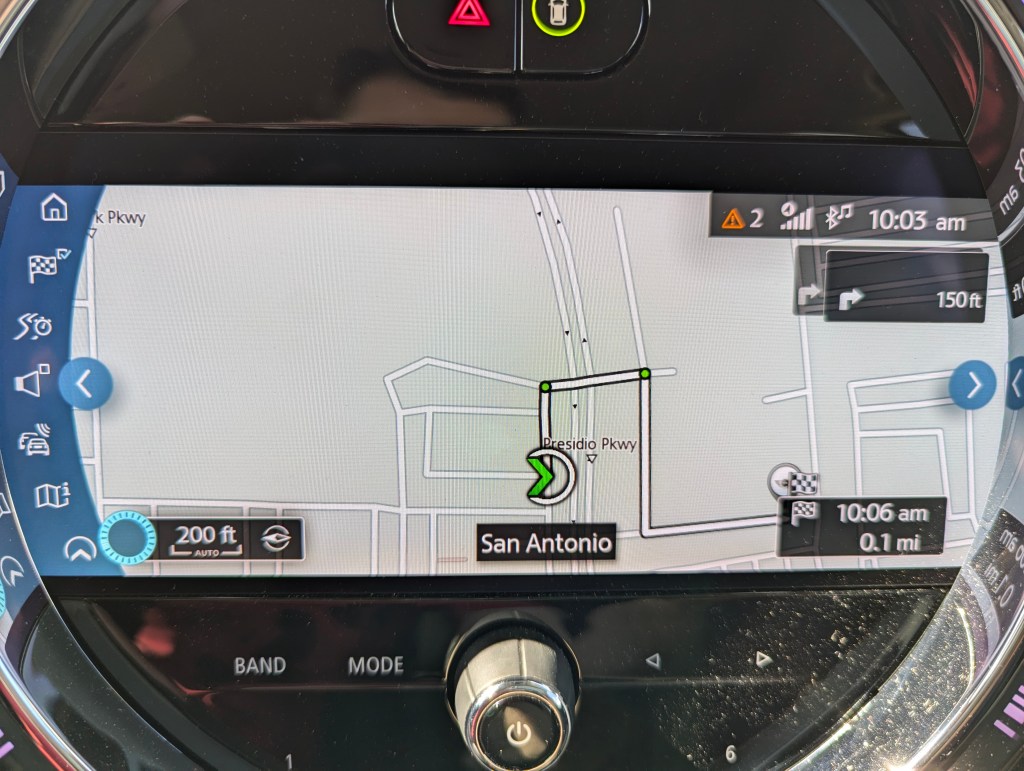
I’ve more or less gotten used to using Bluetooth for music and calls and I can live with that honestly. It would be nice to be able to select a song or artist while on the move, but with a little planning ahead I don’t mind and it’s more functional than I expected.
Cons
Range
There’s no way around it: the range is not great. That being said, there are plenty of situations where this is not a deal breaker; and it’s becoming less restricting. Though some are frustratingly slow to open, the number of fast chargers along highways near me has almost doubled since I bought the car and a future is now in sight where one could feasibly drive an SE cross-country. However, just because it’s doable does not mean anyone would do it or enjoy doing it. No matter how many chargers come online it will never be a good road trip car.
Charge Port
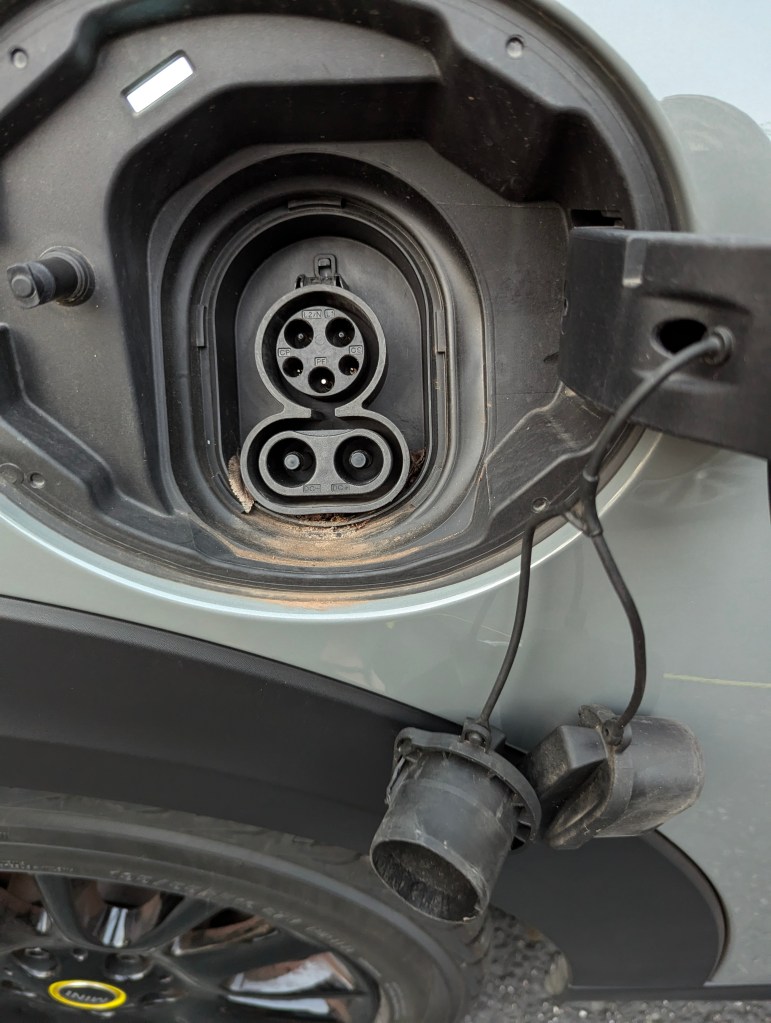
The charge port is located where the gas cap is on the ICE Mini: behind the passenger door. This does not end up being a very convenient location. It’s too far back for most fast charge cables to reach if you pull in forward, but it’s not close enough to the rear to easily reach if the charge cable is coming from the other side of the car. There are certainly some charger/parking spot arrangements that make things difficult. The charge port itself could be better. The plastic inserts that cover the plugs are cheap. There’s a spot to perch the J-1772 cover, but the CCS cover is left to dangle. I’d permanently remove at least the J-1772 cover but the charge port flap is not waterproof (as evidenced by the dirt), so the plug covers are necessary.
Mini
Despite a pleasant buying experience, I’m worried the brand will end up being a con over the lifetime of the vehicle. Although my feelings are mostly based on hearsay and assumptions, I have a suspicion that it could end up being a more expensive car to keep and maintain in the long run versus other EVs in the price range. Minis are not known for their reliability, as far as I am aware. I hope the lack of an engine will mitigate this, but since the SE is an ICE chassis stuffed with batteries there are still plenty of parts shared with the gas model. Worse, as a BMW company, I am afraid of how much parts will cost. Furthermore, being a low-volume model that is about to be replaced after just a few years I worry both about ongoing support and finding people to work on it outside of expensive dealerships. And my one trip (which turned into many) to the service center at my dealer did not give me confidence in Mini service centers.
Tires
At the rate I’m going the factory tires won’t make it to 20,000 miles, which was a shock to me. For reference, they are wearing out at the same time as my Outback’s factory tires, which have 1 year and 30k more miles on them. However, I opted for the summer tires when I spec’d the Mini – something I don’t have experience with – so they were obviously going to have a shorter lifespan. I am going to replace them with all-season tires and see if that increases the lifespan significantly or if the extra weight of the battery and extra torque on the tires are the main factors.
I am also going to replace them with run-flat tires because of course the SE does not come with a spare tire or have a place for one. I’m all for a spare tire and considered getting one for the Mini, but there’s really nowhere to put it. Maybe if I hold onto it long enough I’ll realize my dream of turning it into a safari hatch and mount a full-sized spare on the roof. I don’t have experience with run-flats and I’m a bit worried about how they will affect the ride, but I do not trust the mobility kit at all. I tried to use it when I got a nail in one of the tires. I hooked up the compressor and screwed in the can of sealant. It did nothing but rattle around and fill up the tire with useless goo. I would absolutely recommend throwing out the whole set-up and replacing it with a better air compressor, which has saved me from slow leaks countless times.
 Miniwatt Auto